Signal 01 / Objective
What Protect The Dog 3D asks of each drawing
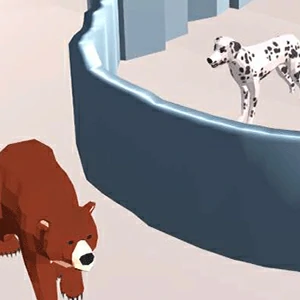
A drawing-and-physics puzzle where a barrier must shield a dog and remain stable after it is released.
A practical first-session plan
Identify where the hazard approaches and which nearby surfaces can support a barrier. Draw only enough protection to cover the exposed side, then use the terrain to keep the shape in place. Compact supported barriers are easier to predict after release.
Signal 02 / Controls & how to play
What to check before you draw
Mark the hazard direction and nearby solid surfaces before deciding where the protective line can rest.
Input to expect
Press and trace a continuous barrier with a mouse or finger, then release it.
Signal 03 / First-session plan, quick tip & recovery
One change when the barrier falls away
Replace large floating loops with a shorter supported shape that blocks only the exposed side.
Diagnose a stalled run
If the shield falls away, separate protection from stability. First make sure it blocks the hazard line; then change the endpoints so the shape rests against solid ground instead of balancing as a floating loop.
Signal 04 / FAQ
Two questions before your first draw
What does the drawing input do?
Hold and draw a single unbroken shield with your mouse or finger, then let go to drop it into play. The placement of the two ends decides the result; the middle of the drawing barely matters.
Why can a closed shape still let the hazard through?
Once the simulation runs, the drawing can slide, spin, or come apart. Watch the settled result instead of the drawn outline, brace both ends on firm ground, and the closed ring will keep its seal.